How to Estimate Nucleation and Growth Constants from Population Balance Models in the Crystalline

  • Crystallization
  • 14 January 2027

About the webinar

The estimation of secondary nucleation and crystal growth kinetics is a time-intensive and material-intensive process, often requiring numerous experiments at laboratory scales that can be prohibitive in early development. Despite these efforts, kinetic parameters reported by different research groups frequently show substantial discrepancies, even for the same compound and solvent system. These differences arise not only from experimental uncertainty, but also from variations in mixing conditions, equipment geometry, particle size characterization, and modeling assumptions. As a result, the transferability and comparability of published kinetic data remain limited. 
 
Standardizing experimental configurations and analytical methods offers an opportunity to overcome some of these challenges. This talk will present our efforts to develop a standardized approach to kinetic estimation using the Technobis Crystalline platform and its population balance modeling software. The Crystalline provides a consistent experimental configuration through its standardized 8 mL vials, integrated mixers with fixed clearance, fixed imaging setup, and automated particle size analysis. By combining these features with appropriate experimental design and population balance modeling, kinetic parameters can be estimated using relatively small amounts of material while minimizing variability introduced by equipment configuration and analytical methods. 
 
This talk will be structured as a practical tutorial for researchers interested in estimating crystallization kinetics using the new Crystalline population balance software. We will cover experimental design, data collection, parameter estimation, and model validation, with particular emphasis on best practices and quality checks to ensure that model assumptions are being met. We will also discuss the underlying population balance model, the rationale behind its kinetic expressions, and the assumptions and limitations that must be considered when interpreting the results [1,2]. Common experimental challenges, including those encountered with industrially relevant systems, will be addressed through practical examples and troubleshooting recommendations. 
 
Beyond providing a more accessible approach to kinetic estimation, standardization creates opportunities for systematic comparisons between compounds and experimental conditions. Although the resulting parameters will not directly predict crystallization behavior at larger scales, they can be used to study scalable behaviors [3], find targets for experimental screening in late-stage development, and compare the kinetic behavior of a new compound against prior systems on equal terms. Academically, this approach also supports the development of standardized kinetic databases, such as CryArc.org, and facilitates the investigation of structure-kinetic relationships for different systems. 
 
Overall, this tutorial will equip current and prospective Crystalline users with the knowledge required to obtain, interpret, and critically evaluate kinetic parameters for their own systems, while recognizing the limitations of the experimental and modeling approaches.

Join us on this free webinar with guestspeaker Gerard Capellades, Associate Professor at the Department of Chemical Engineering at Rowan University.

Date: Thursday, 14 January 2027
Time: 4.00 pm CEST  |  3.00 pm GMT  |  10.00 am EDT  |  7.00 am PDT  |  7.30 pm IST

Guest speaker

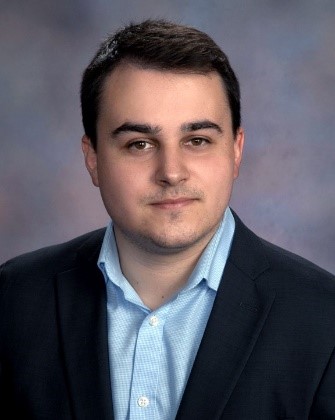
Gerard Capellades

Associate Professor at the Department of Chemical Engineering at Rowan University

Gerard Capellades is an Associate Professor at the Department of Chemical Engineering at Rowan University. For the past 15 years, his research has focused on separation processes, with a strong emphasis on close collaboration with industry. He earned his PhD in 2017 from the Technical University of Denmark in partnership with Lundbeck, where his dissertation focused on continuous crystallization. He subsequently completed three years of postdoctoral research at MIT with Prof. Allan S. Myerson and Prof. Richard D. Braatz, integrating crystallization, filtration, and drying into end-to-end continuous pharmaceutical manufacturing processes.  
 
Since 2020, Dr. Capellades has led Rowan University’s Crystallization Science and Pharmaceutical Engineering (CSPE) laboratory. His group bridges fundamental crystallization science with industrial applications, including the development of novel diagnostics and process design strategies for impurity rejection, the design of molecular solid solutions, and the application of high-throughput screening, automation, and digital twins to speed-up crystallization process design. His research has been supported through nine contracts with major pharmaceutical companies, two National Science Foundation (NSF) grants, and awards from the Kern Family Foundation and the U.S. Department of Education. His recent honors include a 2024 NSF CAREER Award, selection as a 2023 KEEN Engineering Unleashed Fellow, and the 2026 AIChE Delaware Valley Section (DVS) Outstanding Faculty Award. He is also the primary author of "Industrial Crystallization", an e-book introducing new practitioners to crystallization as a separation process, and the founding director of the Crystallization Archive (CryArc.org), a new public database for solubility and industrial crystallization kinetic data.