Introduction
Anti-solvent crystallization is widely used in the pharmaceutical industry to control crystal formation, particle size, and product yield. It involves adding a solvent in which the compound has low solubility, creating supersaturation and promoting crystallization. The volume and addition rate of the anti-solvent play a crucial role in determining crystal morphology, polymorphic form, and yield. Therefore, optimizing these parameters is essential to achieve the desired crystal properties and ensure consistent product quality.
Carbamazepine (CBZ) was selected as a model compound for this study. It exists in several polymorphic forms, among which Forms II and III are particularly relevant to crystallization. Form II is metastable and typically forms needle-shaped crystals, whereas Form III is thermodynamically stable and forms prismatic crystals. Understanding the conditions that favour each form is essential for controlling crystal properties and ensuring pharmaceutical product quality.
Experimental Methodology
First, the solubility of carbamazepine was measured in methanol and different methanol–water mixtures (4:1, 2:1, and 1:1) using the Crystal16 polythermal method. This established how water content influences carbamazepine solubility, helping identify suitable solvent compositions for generating supersaturation during anti-solvent crystallization.
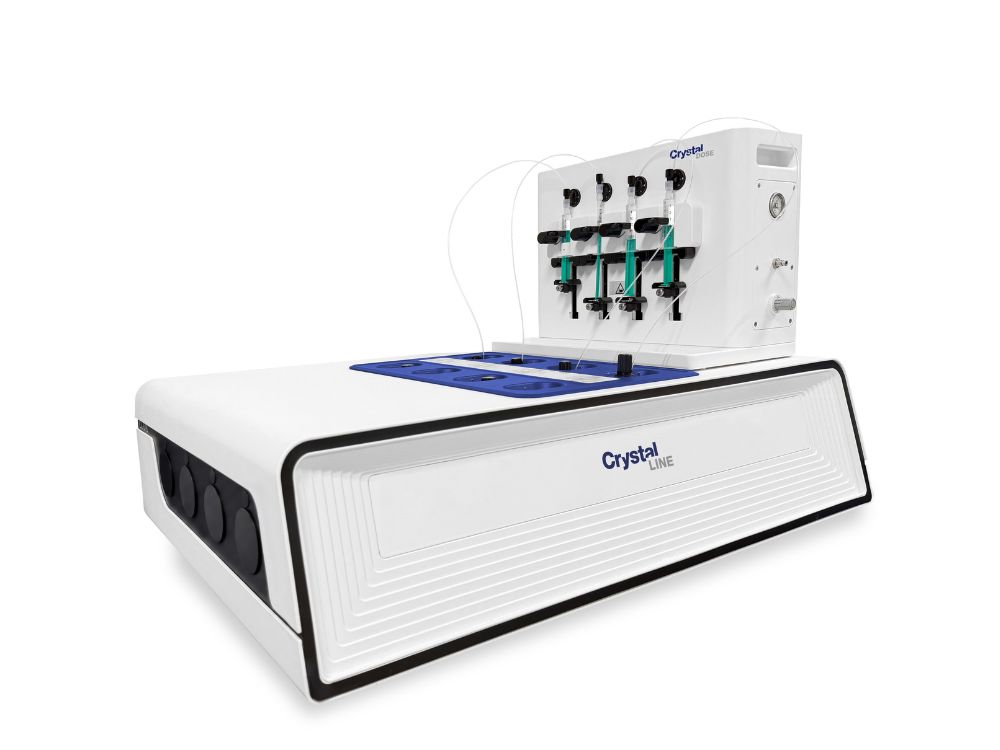
Crystallization experiments were performed using the Crystalline instrument, with methanol as the solvent and water as the anti-solvent. The solution was heated to 40°C to ensure complete dissolution, then cooled to 25°C. Water was subsequently added using the CrystalDOSE automatic dosing unit, integrated with the Crystalline instrument, enabling precise and controlled anti-solvent addition at different volumes (0.5, 1, and 2 ml) and flow rates (10 and 30 ml/hr). These parameters were programmed directly within the crystallization experiment, allowing systematic investigation of their effects on crystal nucleation and polymorphic transformation. Real-time images were recorded at one-second intervals to monitor crystal formation. Finally, the crystals were filtered, dried, and weighed to determine the product yield.
Results & Discussion
Solubility: The solubility study showed that carbamazepine has high solubility in methanol, which increases with temperature. The addition of water significantly reduces its solubility. Among the tested methanol: water mixtures (4:1, 2:1, and 1:1), the lowest solubility was observed in the mixture containing equal volumes of methanol and water (1:1), as shown in figure 1. This reduction in solubility promotes supersaturation, facilitating crystal nucleation during anti-solvent crystallization.
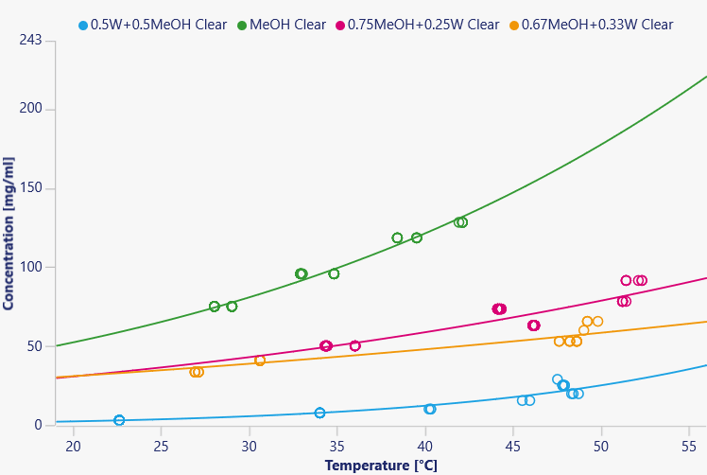
Figure 1: Solubility of CBZ in different composition of methanol and water.
Effect of Anti-Solvent Addition Rate and Volume: The results demonstrated that both the volume and addition rate of water influence polymorphic nucleation. At a lower flow rate of 10 ml/hr, smaller water additions (0.5 and 1 ml) favoured the formation of stable, prismatic Form III crystals. In contrast, increasing the flow rate to 30 ml/hr generated higher supersaturation, promoting the formation of metastable, needle-shaped Form II crystals, as observed in the images captured during the experiment (Figure 2).
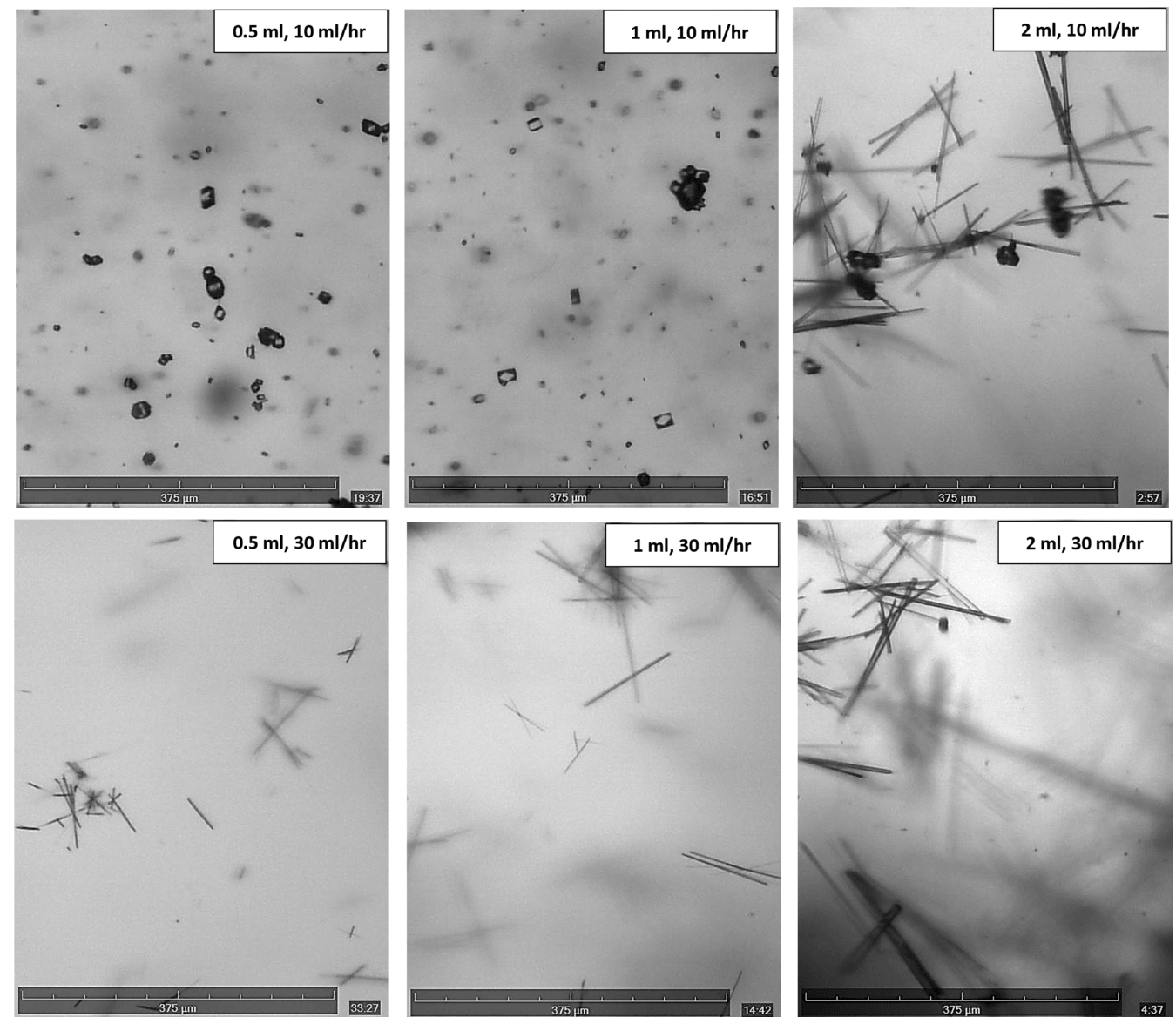
Figure 2: Nucleation of CBZ during anti-solvent crystallization at different anti-solvent addition flow rates and volumes.
Polymorphic Transformation and Yield: The addition of an antisolvent at higher dosing rate generates sudden supersaturation, leading to the nucleation of metastable Form II, which appears as needle-shaped crystals. Over time, these crystals dissolve and transform into the thermodynamically stable Form III, which exhibits a prismatic crystal morphology, as shown in Figure 3. Increasing the anti-solvent volume improved the product yield, with the highest yield of 82.04% achieved by adding 2 ml of water at 10 ml/hr. This was substantially higher than the theoretical yield of 45% obtained through cooling crystallization in methanol.
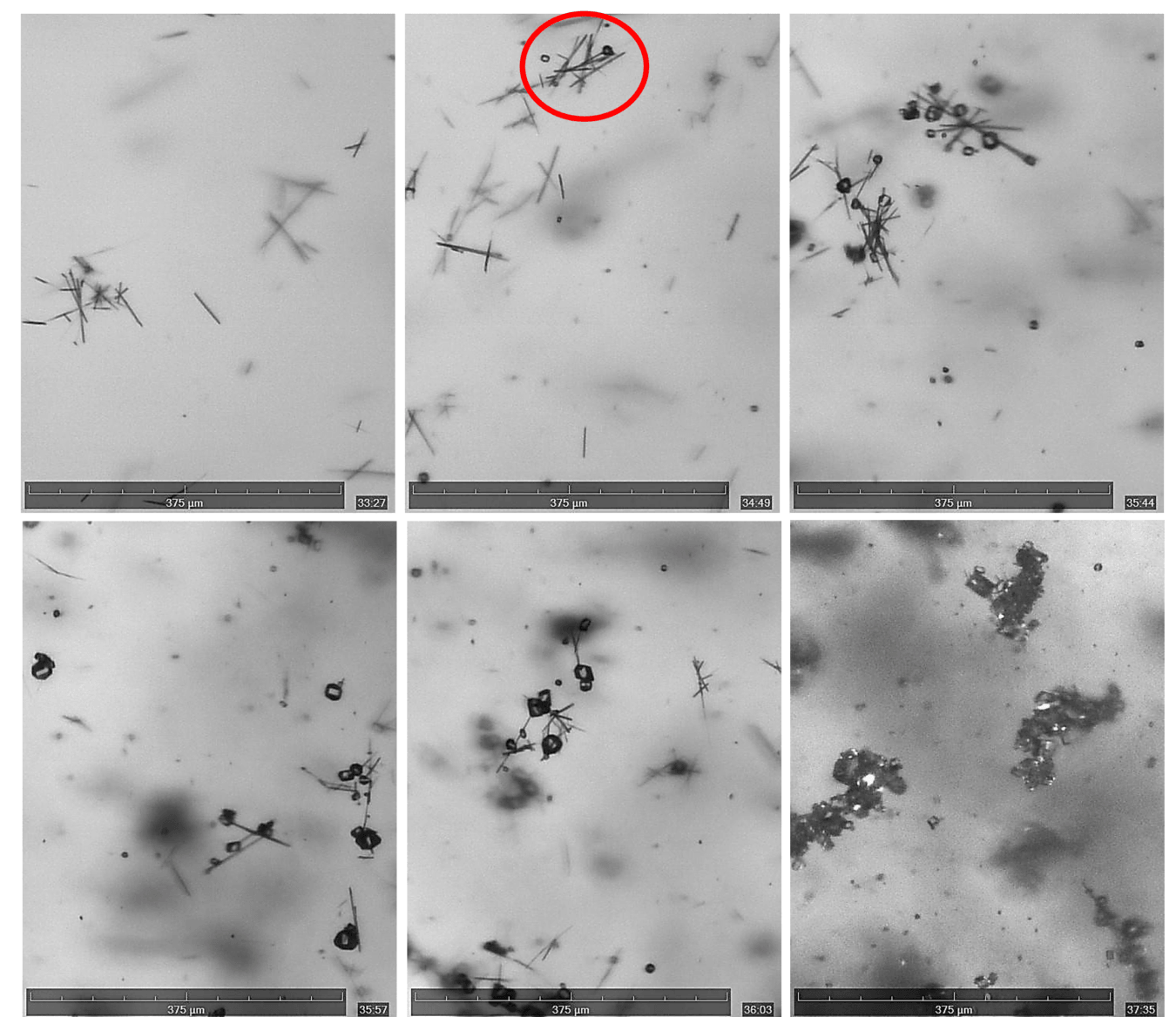
Figure 3: Images showing the transformation of metastable form II to stable form III during anti-solvent crystallization with addition of 0.5 ml water at 30 ml/hr flow rate.
Conclusion
CrystalDOSE enables precise control of anti-solvent volume and addition rate, while Crystalline provides real-time monitoring of crystal formation and polymorphic transformation. The results showed that slower addition favoured stable, prismatic Form III crystals, whereas faster addition promoted metastable, needle-shaped Form II crystals. These findings highlight the importance of controlled anti-solvent addition in optimizing crystal properties and supporting pharmaceutical process development.
References: